Parish Priests and Curates of Ballyoughter
This page records the priests who served the Church of the Sacred Heart, Ballyoughter, from the appointment of Rev. Henry Williams as Administrator in 1871 to the present day.
Before 1875, the parish of Ballyoughter comprised the townlands of Ballyoughter, Camolin, Ballycanew, Craanford and Monaseed. It was classed as a Mensal Parish and was overseen by a Church Administrator with the Bishop as Parish Priest.
In April 1875, Craanford and Monaseed were detached from the Mensal Parish of Ballyoughter by Bishop Furlong and became the Parish of Craanford. The Parish of Ballyoughter, with Curacies at Camolin and Ballycanew, became a Parish in its own right with Rev. Robert Sinnott (C.C. of Wexford since 1870) appointed as the first Parish Priest.
Rev. Henry Williams had laid the foundation stone of a new church at Ballyoughter, on 12 March 1874, but it was left for Rev. Robert Sinnott to oversee the completion of the building work which finished in 1876.
On 10 January 1970, the designation of the Parish was changed from Ballyoughter to Camolin. This coincided with the appointment of Rev. Matthew Doyle as Parish Priest to Camolin. He took up residence at Camolin, unlike his predecessors who lived in Ballyoughter.
Rev. Nicholas Canon Cardiff was the last Parish Priest to occupy the Parochial House in Ballyoughter. Canon Cardiff retired in 1970, an event that marked a significant change in Ballyoughter’s parish role with parish status transferring to Camolin and Rev. John Nolan being appointed the first Curate of Ballyoughter Church.
Timeline of Clergy
The table below gives a chronological overview of the priests who served Ballyoughter. More detailed biographical notes are included further down the page.
| Priest | Role | From | To |
|---|---|---|---|
|
Rev. Henry Williams |
Administrator |
1871 |
1875 |
|
Rev. Robert Sinnott |
Parish Priest |
1875 |
1886 |
|
Rev. Thomas Staples |
Parish Priest |
1886 |
1892 |
|
Rev. John Roice |
Parish Priest |
1892 |
1895 |
|
Rev. Andrew Kinsella |
Parish Priest |
1895 |
1900 |
|
Rev. Patrick Doyle |
Parish Priest |
1900 |
1909 |
|
Rev. Nicholas Mernagh |
Parish Priest |
1909 |
1928 |
|
Rev. Gregory Pettit |
Parish Priest |
1928 |
1940 |
|
Rev. James Doran |
Parish Priest |
1940 |
1951 |
|
Rev. Nicholas Cardiff |
Parish Priest |
1953 |
1970 |
|
Rev. John Nolan |
Curate |
1970 |
1979 |
|
Rev. Joseph Kavanagh |
Curate |
1979 |
1999 |
|
Rev. Colm Murphy |
Curate |
1999 |
2005 |
|
Rev. Thomas Orr |
Curate |
2005 |
2017 |
|
Rev. Tomás Kehoe |
Curate |
2017 |
Present |
Profiles of the priests and curates are available further down the page.
Available Photographs of Parish Priests and Curates
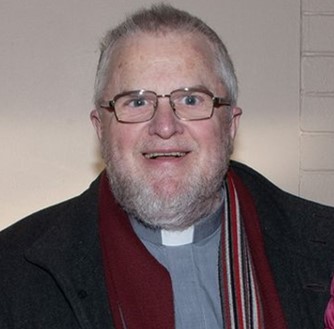
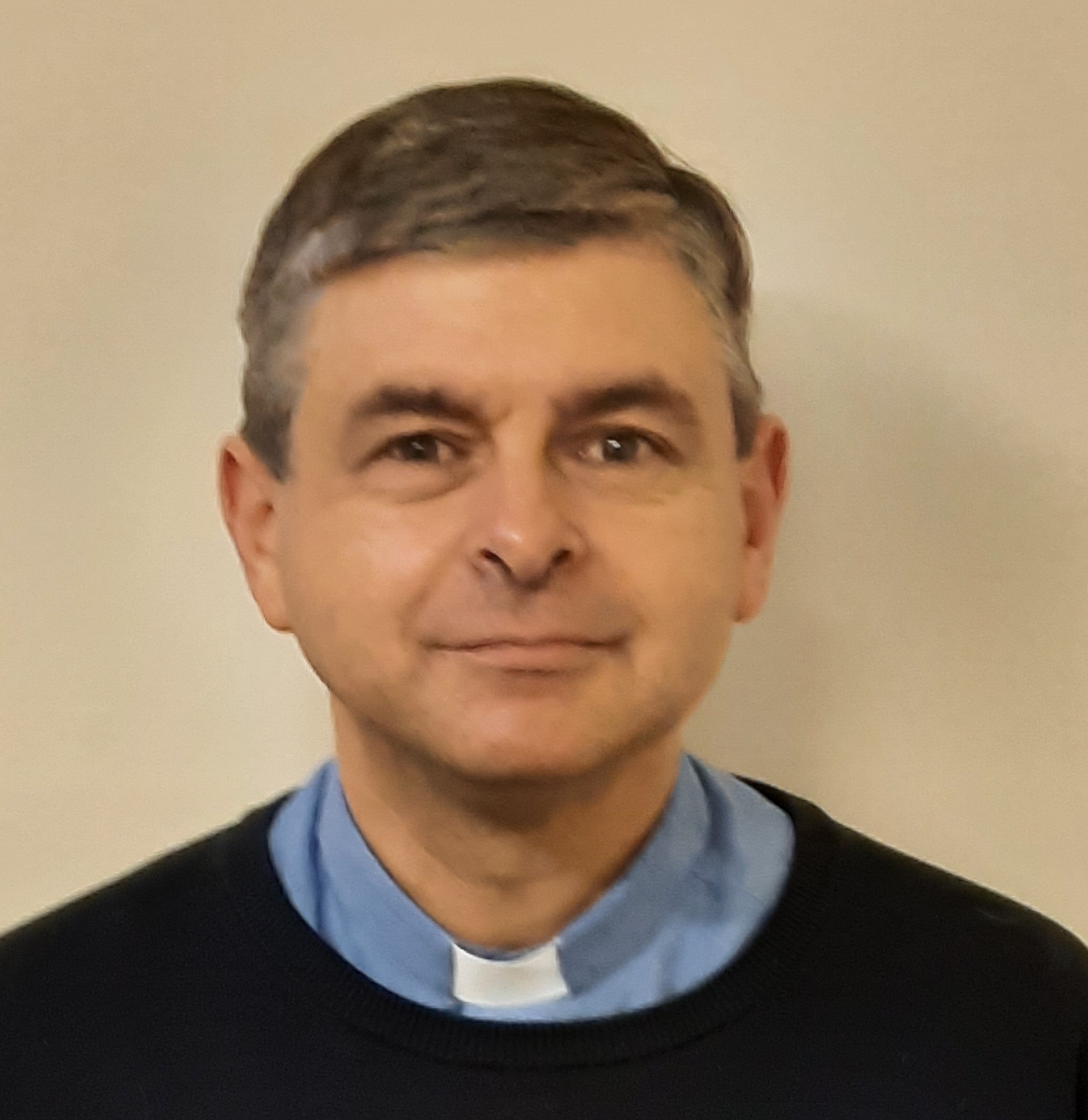
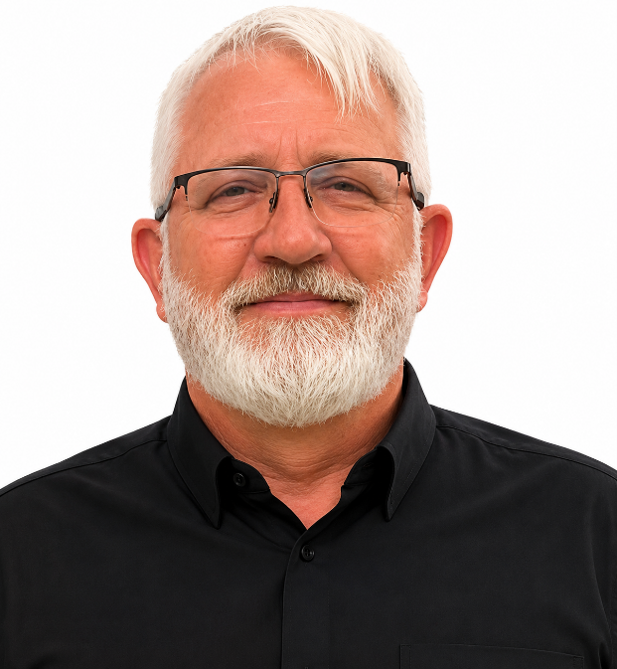
The following images show some of the priests who served Ballyoughter. Additional photographs will be added if they become available.
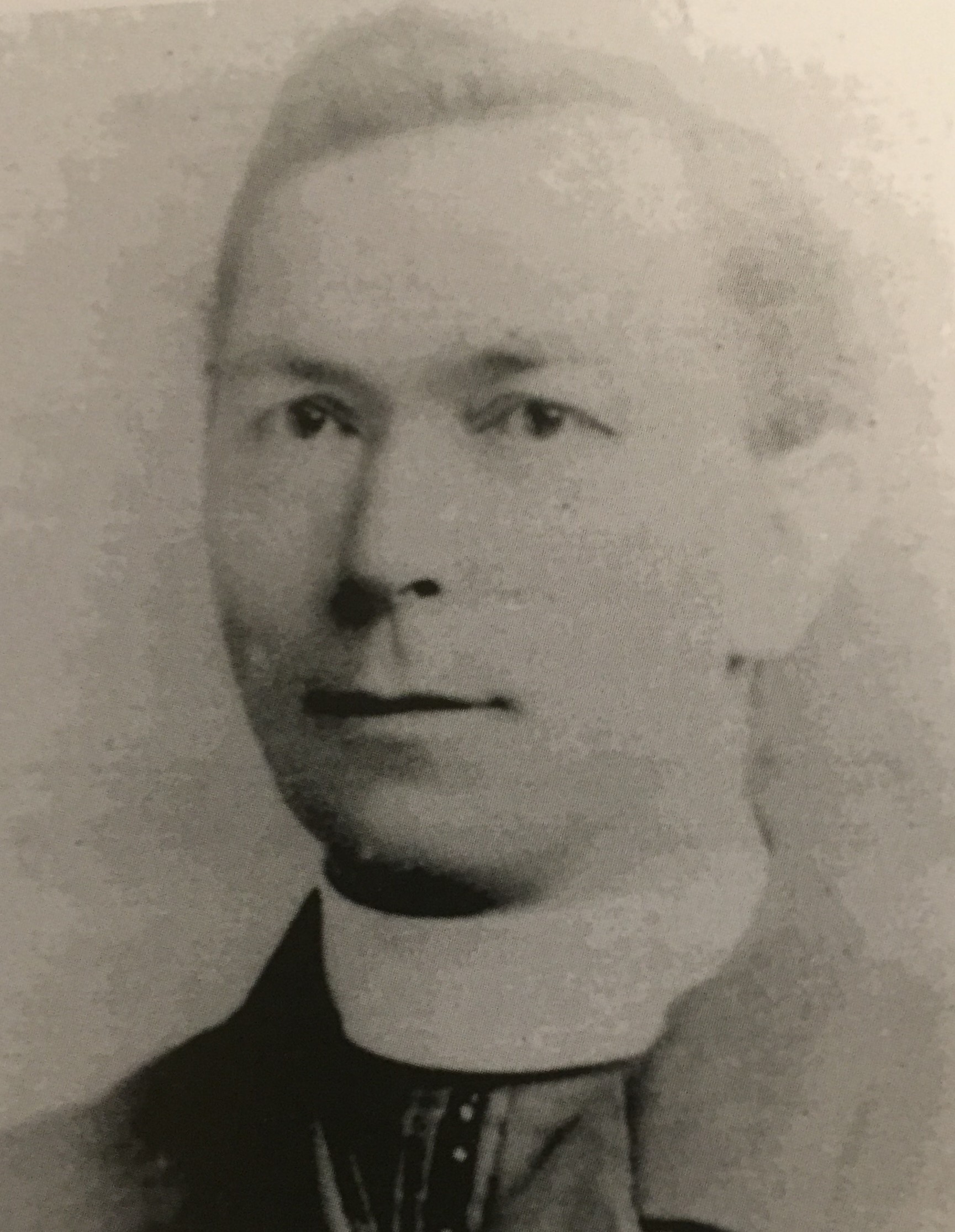
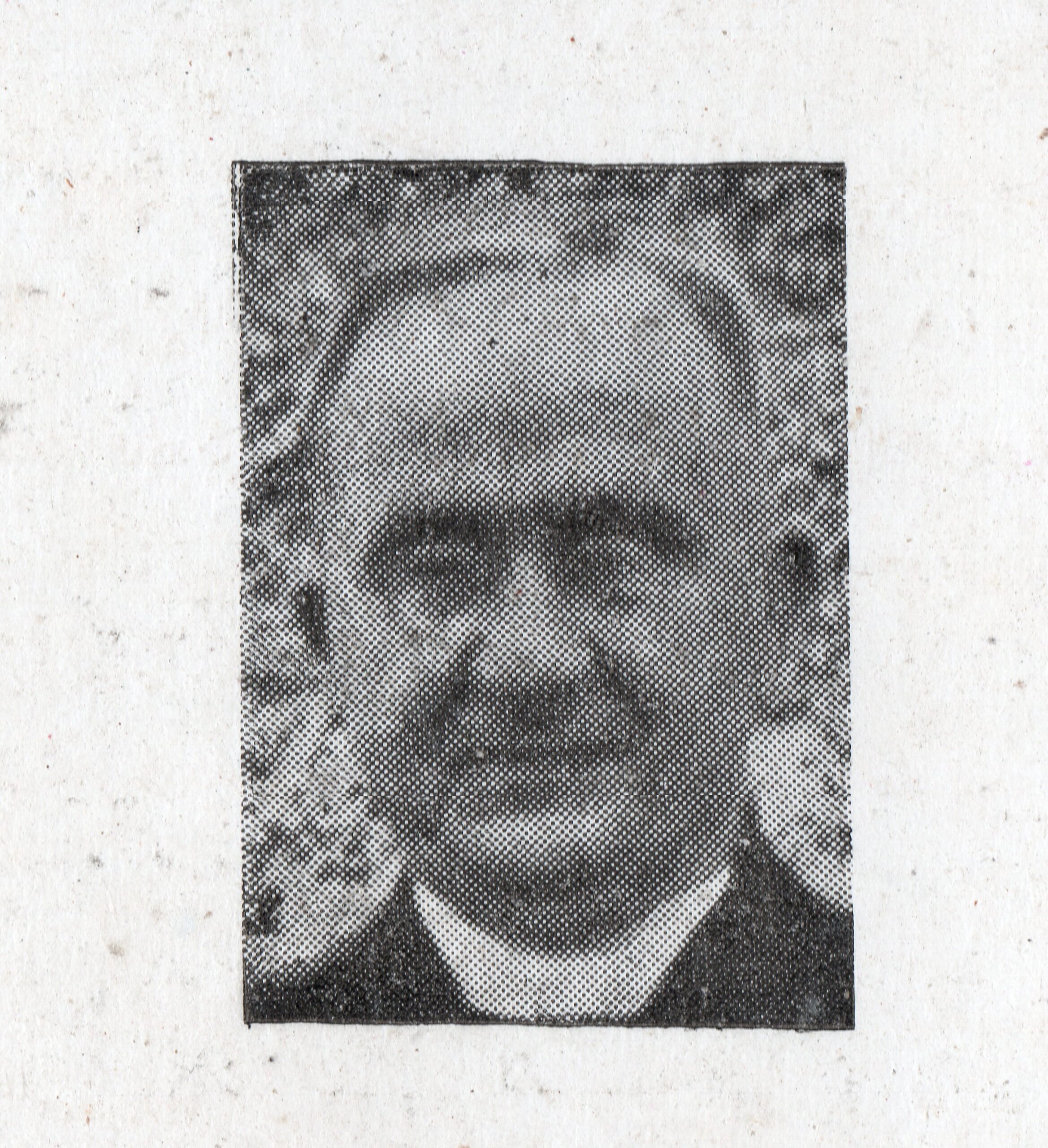
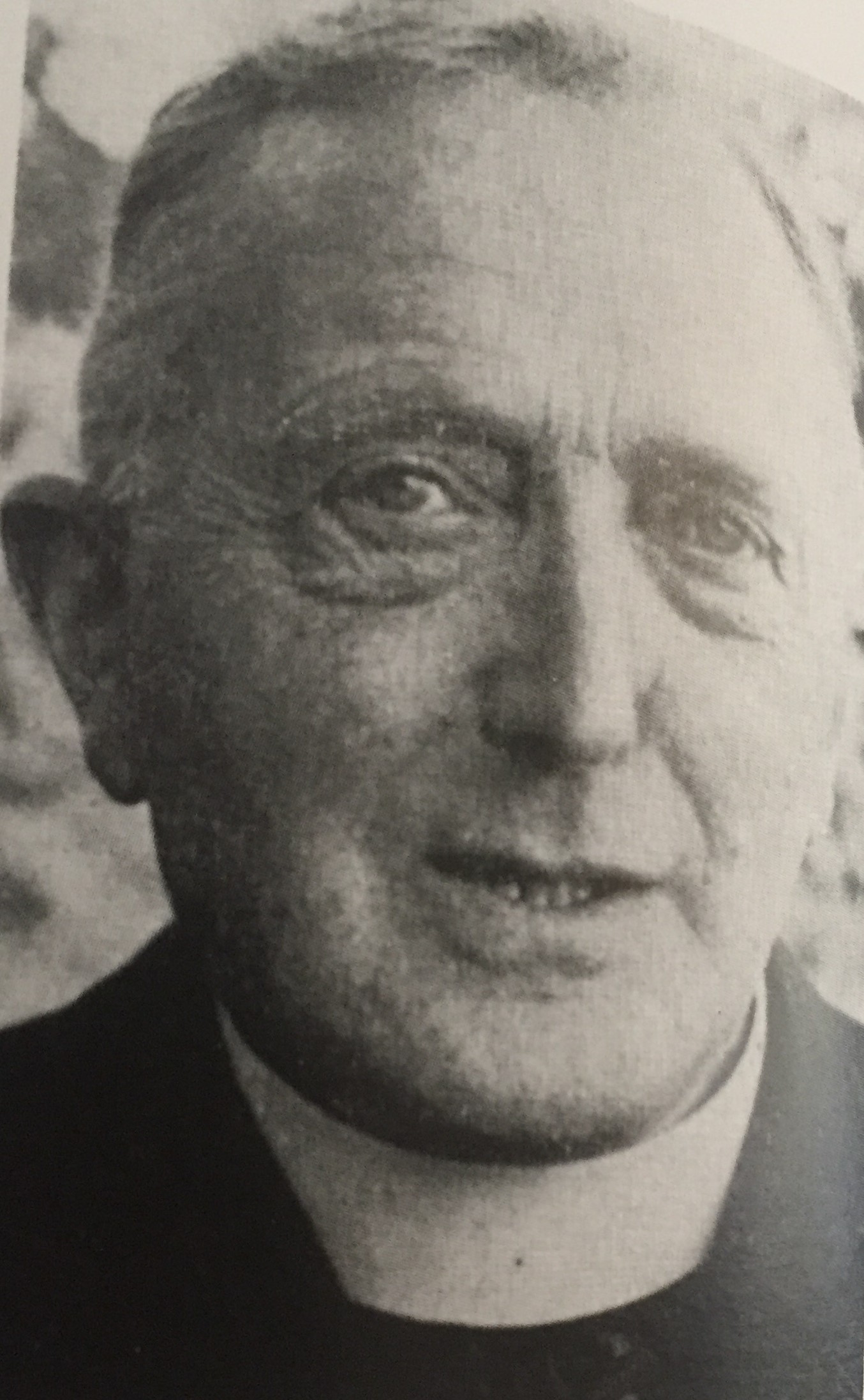
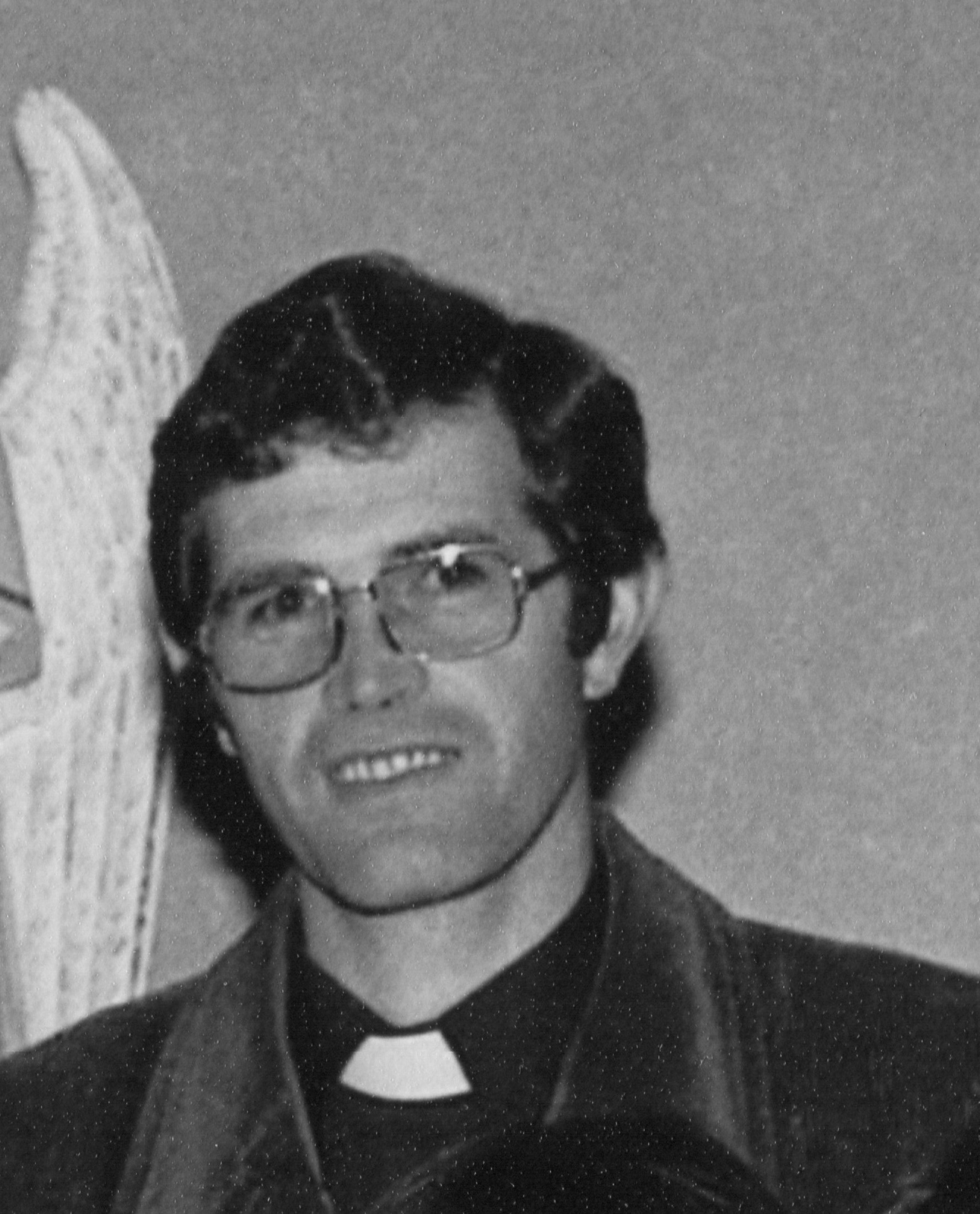

Memory Cards of Parish Priests and Curates of Ballyoughter
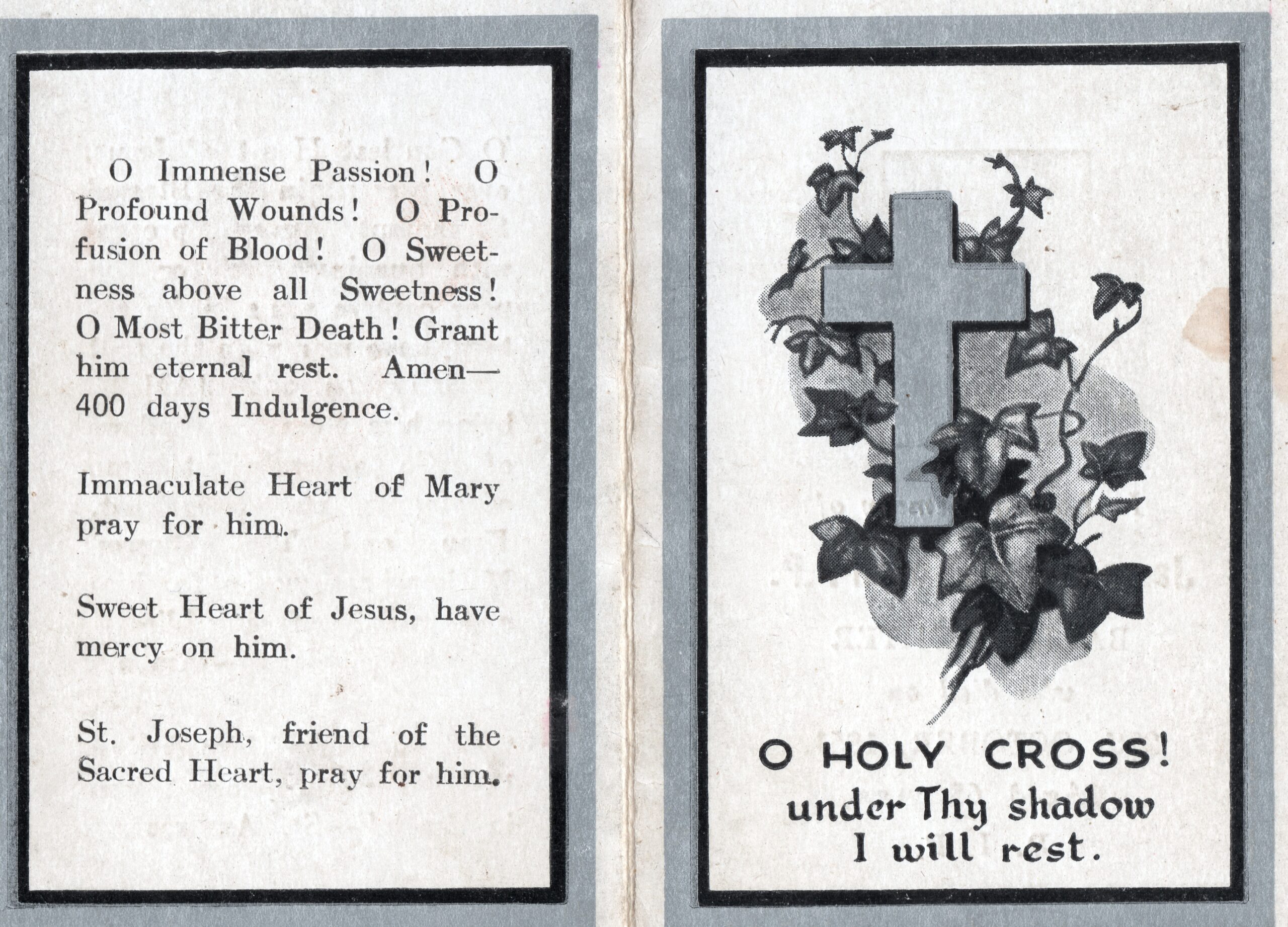
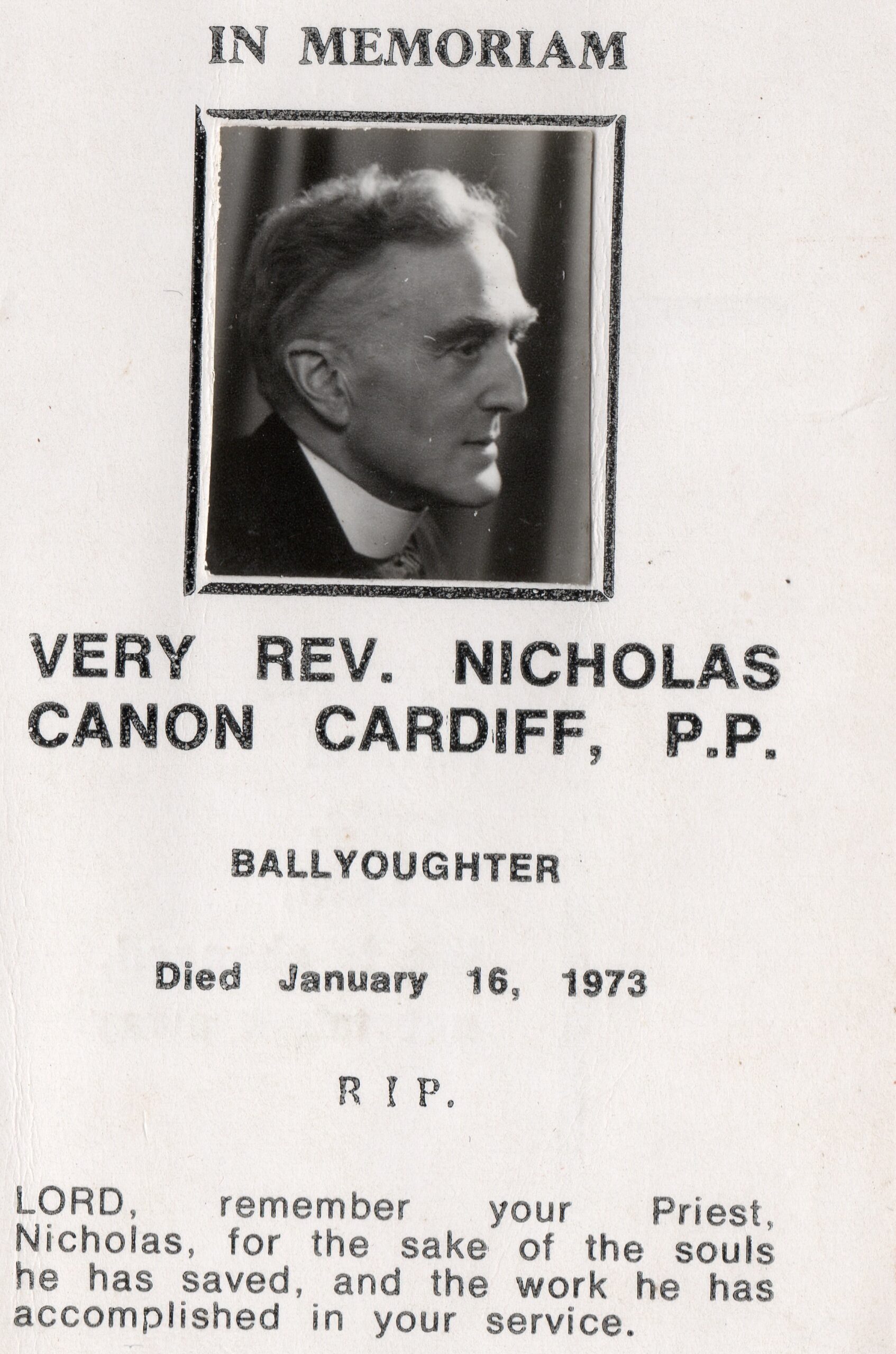
Biographical Profiles of Parish Priests and Curates of Ballyoughter
Much of the information in this section is based on material from the Camolin Parish website and is reproduced with the kind permission of Very Rev. Fr Joseph Kavanagh PP, Camolin.
Rev. Henry Williams was born at Forestalstown in 1840. His parents belonged to the farming community, and he received his early education in the school of his native parish. He later entered Callan College, before moving to Mount Melleray, and finally to Carlow College, where he began his theological studies in 1865.
During his time as a student, Fr. Williams showed a marked aptitude for architectural studies. This interest remained with him throughout his priestly life, and he later became known for his sound judgement in matters relating to the building, repair and improvement of churches.
He was ordained in 1867 and, in June of that year, was appointed curate in his native parish of Cloughbawn. In June 1869, he was transferred to Monageer, where he soon set about the building of a new church. The church had scarcely been completed when, following the death of Fr. William Purcell in April 1871, Fr. Williams was transferred to Ballyoughter. He was appointed Administrator of the parish in May 1871.
On his arrival in Ballyoughter, Fr. Williams found the people worshipping in a poor little chapel, with an earthen floor, rough walls and very little ornamentation. He immediately set about providing a new church for the parish. He also erected a new school for the district.
At that time, Orangemen were very active in several parts of the parish. Fr. Williams proved to be a determined opponent of their public parades, and within a few months he had succeeded in bringing them to an end in the district.
In 1875, following the death of Canon O’Toole, Fr. Williams became Administrator of Rathangan, which was then made a Mensal Parish. His first task there was to complete the new parish church which Canon O’Toole had begun. Before long, the spire and interior decoration of the church were completed. Fr. Williams also had a deep sympathy for the efforts of tenant farmers who were seeking reform of the land laws.
Fr. Williams died at the parochial residence in Rathangan on Tuesday, 11 April 1882, at the age of 42. His funeral obsequies were celebrated in Rathangan Church, where he was interred.
Rev. Robert Sinnott was a native of Newtown, Kilmuckridge. He was educated at St Peter’s College, Wexford, and later at the Irish College in Paris, where he completed his studies. He was ordained in 1856.
Following his ordination, his first curacy was in Gorey, where he served for fourteen years. In October 1870, he was transferred to Wexford.
In April 1875, Bishop Furlong appointed Fr. Sinnott as the first Parish Priest of the newly established Parish of Ballyoughter, with curacies at Camolin and Ballycanew. His appointment marked an important moment in the history of the parish, as Ballyoughter had just ceased to be a Mensal Parish and had become a parish in its own right.
The foundation stone of the new church at Ballyoughter had been laid by Rev. Henry Williams, the last Administrator of Ballyoughter, on 12 March 1874. However, it fell to Fr. Sinnott to oversee the completion of the building. The new church was completed during his pastorate and became the centre of parish worship.
Fr. Sinnott died on 12 November 1886, at the age of 57.
Rev. Thomas Staples was a native of Cregg, Ballycogley. He was educated at St Peter’s College, Wexford, and later completed his studies at Louvain. He was ordained to the priesthood at the Convent of Mercy, Wexford, on 8 September 1861.
Following his ordination, Fr. Staples served in a number of appointments across the Diocese. He was appointed curate in Ballindaggin on 29 September 1861, before being transferred to Poulpeasty on 22 November 1863. In March 1865, he was appointed curate in Ballykelly. He later returned to Poulpeasty for a second period of service on 20 January 1883.
On 19 November 1886, Fr. Staples was appointed Parish Priest of Ballyoughter, with curacies at Camolin and Ballycanew.
Fr. Staples died on 20 June 1892 at Athy, at the residence of his brother, Rev. J. Staples. He had been staying there for the benefit of his health.
Rev. Roice was the son of Clement Roice and Mrs Roice of Churchtown House, Rosslare. His father was widely known and highly respected as an Irish patriot. He had taken part in the campaign for the abolition of tithes, as well as other movements concerned with the welfare of the Irish people.
Fr. Roice received his early education at St Peter’s College, Wexford. He matriculated at Maynooth on 26 January 1858 and was ordained at St Peter’s College by Bishop Furlong on Sunday, 8 February 1863.
His first appointment was to Wexford in February 1863. Ten years later, in August 1873, he was appointed curate in Sutton’s parish. He was transferred to Galbally in October 1879, and his final curacy was at St Leonard’s, where he served from 14 January 1883.
In August 1892, Fr. Roice was appointed Parish Priest of Ballyoughter, with curacies at Camolin and Ballycanew.
Fr. Roice died at the residence of his niece, Mrs M. A. Ennis, Ardruadh, Wexford, on Friday, 17 May 1895. He was interred in Ballyoughter.
Rev. Kinsella was born in the parish of Kilanerin. He was educated at St Peter’s College, Wexford, and later continued his studies at the University of Louvain. He was ordained by Bishop Furlong at Enniscorthy on 30 May 1874.
Following his ordination, Fr. Kinsella was appointed curate in Screen in June 1874. In October 1885, he was transferred to Monamolin.
Following the death of Very Rev. John Roice, Fr. Kinsella was promoted to the pastorate of Ballyoughter, with curacies at Camolin and Ballycanew, in June 1895.
Fr. Kinsella died after a short illness at the parochial residence on Tuesday, 30 January 1900. He was a brother of Fr. Michael Kinsella, who died in 1946.
Rev. Patrick Doyle was the son of Moses Doyle and Mrs Doyle of Tomanerin, in the parish of Annacurra. His father was a brother of Fr. Thomas Doyle of Ramsgrange.
Patrick Doyle was educated at St Peter’s College, Wexford, and later at Maynooth College, where he matriculated on 10 September 1866. He was ordained by Bishop Furlong in the Loreto Convent Chapel, Wexford, on Monday, 1 April 1872.
Following his ordination, Fr. Doyle served in a number of appointments across the Diocese of Ferns. He was appointed Dean at St Peter’s College in April 1872, before becoming curate in Screen in September 1874. He was later appointed curate in Ramsgrange in July 1876, Boolavogue in August 1877, Wexford in August 1888, Ballyfad on 1 August 1889, and Camolin in November 1893.
On 25 February 1900, Fr. Doyle was appointed Parish Priest of Ballyoughter, with curacies at Camolin and Ballycanew.
Fr. Pat Doyle was one of the last of the Wexford priests who had first been members of the old County Wexford Independent Club and later became leaders of the people during the Land League agitation. During the Land League campaign, he spared no effort. While in Ballyfad, he championed the cause of the Coolgreany evicted tenants with the same ardour he had shown in Shelbourne.
He was also closely associated with improvements in the lives of tenant farmers and labourers. It was mainly through his constant efforts that the first large scheme of cottages in the Gorey, Camolin and Kilanerin districts was carried through. He was also the prime mover in the agitation by the Courtown tenantry which led to the sale of the Courtown Estate, and he presided at all the meetings connected with that campaign.
Fr. Doyle was involved in many organisations. He served as president of the Irish Trade and Labour League, the Ballycanew Gaelic League, and several other local bodies.
He died at his residence in Ballyoughter on Friday, 17 September 1909, having been ill for some time. He was interred in Ballyoughter Cemetery.
Rev. Mernagh was born in the parish of Davidstown. He was educated first at St Aidan’s Academy, Enniscorthy, under Fr. Carey, then at St Peter’s College, Wexford, and finally at the Irish College in Paris. He was ordained there, together with Very Rev. James Murphy, Parish Priest of Oylgate, by Most Rev. Dr Woodlock on 9 June 1887.
Following his ordination, Fr. Mernagh served in a number of curacies across the Diocese of Ferns. He was appointed curate in Ballygarrett on 15 January 1888, before being transferred to Bree in June of the same year. He later served in Ferns from January 1891, Askamore from February 1892, Enniscorthy from May 1898, and Marshalstown from August 1899.
On 10 October 1909, Fr. Mernagh was appointed Parish Priest of Ballyoughter, with curacies at Camolin and Ballycanew.
Like his predecessor, Fr. Pat Doyle, Fr. Mernagh was a strong champion of the tenantry during the Land League period. As Parish Priest of Ballyoughter, he was responsible for building the present church at Ballycanew, which opened in September 1913. Rev. William Fortune became its first resident curate.
Canon Mernagh retired through ill health on 15 July 1928. He died at a nursing home in Dublin on Monday, 5 April 1937, and was interred at Ballyoughter.
Rev. Pettit was the third eldest son of William and Mary Pettit of Rathmore, Broadway. He received his early education at St Peter’s College, Wexford, before travelling to Salamanca in Spain to complete his theological studies. On his return to Ireland, he was ordained by Bishop Browne at the Presentation Convent, Wexford, on 8 September 1899.
His first appointment was to Clongeen, where he served from 5 November 1899. He was later appointed curate in Caim on 8 December 1901, Monaseed on 4 October 1909, and Murrintown on 26 January 1919.
On 23 July 1928, Fr. Pettit was appointed Parish Priest of Ballyoughter, with curacies at Camolin and Ballycanew.
During his time in Ballyoughter, Fr. Pettit erected a new set of Stations of the Cross in the church and arranged for the interior to be decorated. He also improved the Parochial House, and it was during his pastorate that the curate’s residence in Ballycanew was completed.
Fr. Pettit died at a nursing home in Dublin on Friday, 8 November 1940, and was interred in Ballyoughter.
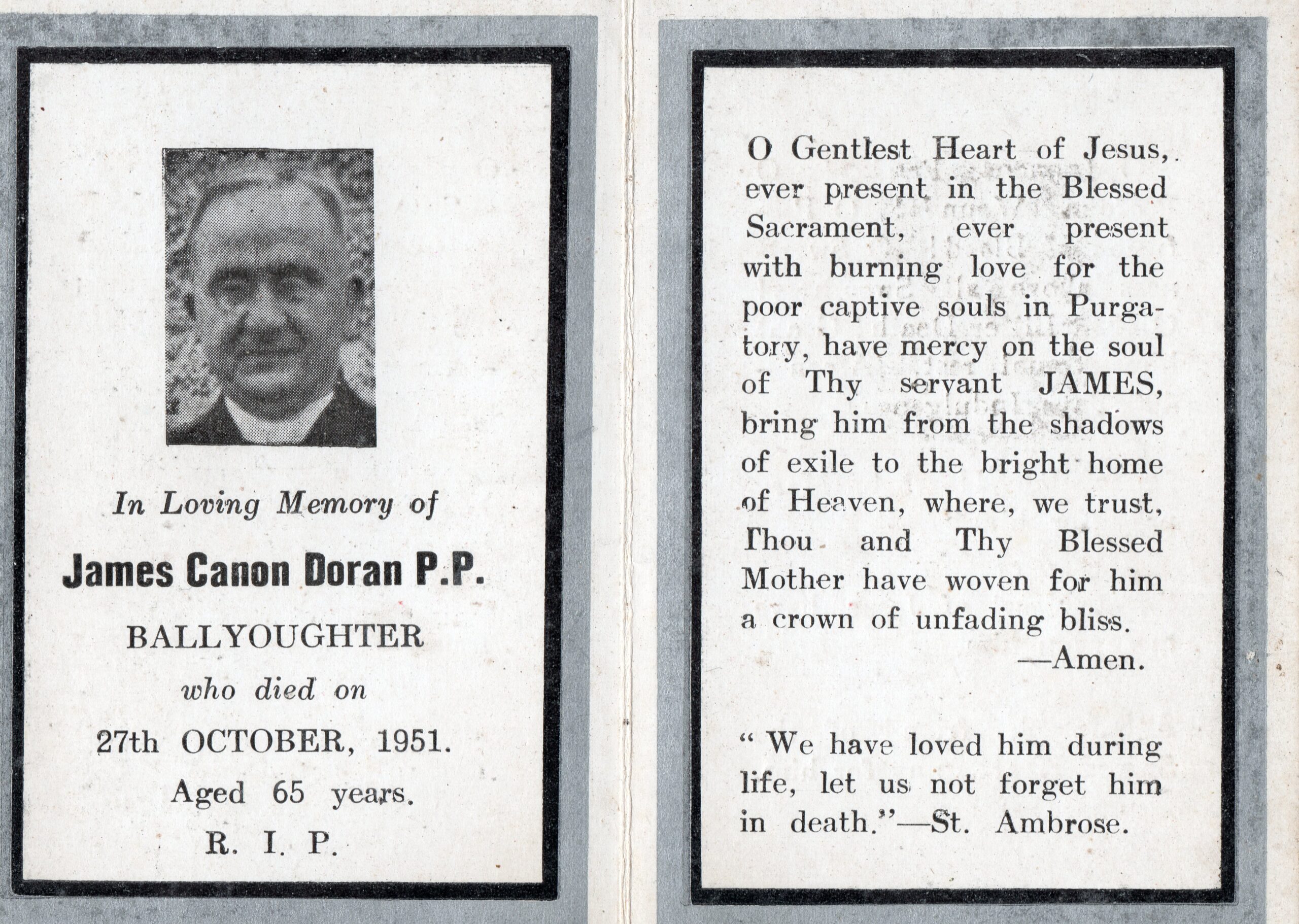
Canon Doran was born in 1886, the youngest son of Peter Doran and Mrs Doran of Craanrue, Edermine. He was educated at St Aidan’s Academy, Enniscorthy, and at St Peter’s College, Wexford.
After completing his secondary education, he pursued a distinguished university course and obtained a BA degree. He then returned to St Peter’s College, where he completed his philosophical and theological studies. He was ordained in June 1912.
In September of that year, Fr. Doran was appointed Professor of Science at St Peter’s College, a post which he held with distinction until he became President of the College in 1932. During his presidency, he undertook the major task of building a much-needed new wing for the ecclesiastical students of the College.
On 12 December 1940, Fr. Doran was appointed Parish Priest of Ballyoughter, with curacies at Camolin and Ballycanew. In 1950, he became a member of the Cathedral Chapter.
Canon Doran died unexpectedly after a short illness on 27 October 1951. He was interred in Ballyoughter.
Canon Cardiff was a member of a well-known family from Gurteenminogue, Murrintown. He was ordained at St Peter’s College, Wexford, on 20 June 1920.
Following his ordination, he served for nearly two years in the parish of St Mary of the Angels, Bayswater, London. On his return to the Diocese of Ferns, he was appointed curate in the Church of the Assumption, Bride Street, Wexford, on 5 April 1922. He ministered there until 12 February 1945, when he was transferred to Rosslare Strand.
Following the death of Canon Doran, Fr. Cardiff was appointed Parish Priest of Ballyoughter, with curacies at Camolin and Ballycanew, on 18 April 1953. He was appointed to the Cathedral Chapter in 1968.
For many years, Canon Cardiff was an active member of the Gaelic League. He was also a noted violinist and competed in Feis Charman in its early years.
He retired on 10 January 1970, after fifty years as a priest. Canon Cardiff died at Ely Nursing Home on 16 January 1973, aged 81 years, and was interred in Ballyoughter.
Fr. Nolan is a native of Quay Street, New Ross, and a brother of Very Rev. Robert Nolan. He was educated in New Ross and later at St Peter’s College, Wexford, where he was ordained on 1 June 1969.
Following his ordination, he was appointed curate in Ballycanew/Ballyoughter on 1 September 1969. He served there until 7 July 1979, when he was transferred to Askamore.
On 3 October 1987, he left the Diocese of Ferns and went to Orlando, Florida. He subsequently left the ministry.
Fr. Kavanagh was born in 1951, the son of Michael and Ellen Kavanagh, née Cassidy, of Bunclody. He was educated at Bunclody National School from 1955 to 1963, St Peter’s College from 1963 to 1968, and St Peter’s Seminary from 1968 to 1974. He was ordained at St Peter’s College on 9 June 1974.
From 1974 to 1979, Fr. Kavanagh was on loan to the Diocese of Down and Connor. He served for four years in the parish of Derriaghy, while his final year was spent in the parish of St John’s on the Falls Road, Belfast.
On his return to the Diocese of Ferns, he was appointed curate in Ballycanew on 7 July 1979. During his time there, he oversaw the complete restoration of Ballycanew Church. The restored church was rededicated by Bishop Brendan Comiskey in March 1991.
In succession to Very Rev. James L. Curtis, who had been transferred to Clongeen, Fr. Kavanagh was appointed Parish Priest of Camolin on 19 June 1999. During his pastorate, he oversaw a series of significant improvements to the church, parish hall, school and parish grounds.
In 2001, the Church of the Immaculate Conception, Camolin, was completely decorated both inside and outside. Between 2004 and 2005, the Fr. Owen Kehoe Memorial Parish Hall was restored. In 2007, the tarmac surface around the church and graveyard was replaced with cobble-lock brickwork. The pathways at the side of the church were widened, and the cement slabs on Calvary were also replaced. In 2008, the exterior of the church was painted.
Further improvements followed in 2009. Lanterns were installed on both sides of the roadway from the entrance to the rear of the church. A shrine to Our Lady was built near the front of the church, and an Infant Memorial Garden, named Tír na nÓg, was created in the cemetery.
The local primary school was also upgraded during this period. Two classrooms, two resource rooms, a storeroom, a library, a staff room and a principal’s office were added. The official opening of the upgraded school took place in June 2009.
Fr. Murphy was born in 1952, the son of P. N. Murphy and Maureen Murphy, née Cullen, of Kilrane, Rosslare Harbour. He was educated at Kilrane National School from 1957 to 1965, Good Counsel College, New Ross, from 1965 to 1970, and St Peter’s Seminary from 1970 to 1976. He was ordained at St Patrick’s Church, Rosslare Harbour, on 28 November 1976.
Following his ordination, Fr. Murphy was attached to the House of Missions from 1977 to 1987. He later served in St Senan’s Parish from 1987 to 1989, and at St Peter’s College from 1989 to 1994. He was then appointed curate in Clonard, where he served from 1994 to 1999.
In June 1999, Fr. Murphy was appointed curate in Ballycanew/Ballyoughter, where he served until September 2005.
Fr. Orr was born in 1970, the son of John Orr and Ann Orr, née Doyle, of Coolnaleen, Camolin. He was educated at Ballyduff National School from 1974 to 1982, Gorey Vocational School from 1982 to 1988, Kildalton Agricultural College from 1988 to 1989, St Peter’s Seminary from 1994 to 1998, and St Patrick’s College, Maynooth, from 1998 to 1999.
He was ordained to the diaconate in St Aidan’s Cathedral, Enniscorthy, on 30 January 2000. After spending a period as a deacon in the Archdiocese of Westminster, he was ordained to the priesthood at Ballyduff Church on 24 September 2000.
Following his ordination, Fr. Orr was appointed to St Aidan’s Cathedral, Enniscorthy. In September 2005, he was transferred to Ballycanew/Ballyoughter.
Fr. Tomás Kehoe was born in 1975 and is a native of Garrenstackle, near Bree, Co. Wexford. He is the son of the late Tommy and Breda Kehoe. His early life was closely connected with farming and rural life, experiences which helped to shape his understanding of parish, community and pastoral ministry.
After completing his secondary education, he studied Agricultural Science at University College Dublin, graduating in 1998. He entered formation for the Diocese of Ferns in August 2002 and undertook his studies for the priesthood at St Patrick’s College, Maynooth.
During his formation, he completed pastoral placements in Wexford Town, the Church of the Annunciation, Clonard, and Gorey Community School. His diaconate year included weekend ministry in Newbridge parish, Co. Kildare.
Fr. Tomás Kehoe was ordained to the priesthood by Bishop Denis Brennan in his home parish of Bree on 29 June 2008.
Following ordination, he served as Chaplain to Wexford General Hospital from 2008 to 2010. He was then appointed curate in New Ross Parish, where he ministered at St Mary and St Michael’s Church and served the wider parish community from 2010 to 2017.
In 2017, Fr. Kehoe was transferred to Ballycanew/Ballyoughter as curate, replacing Fr. Thomas Orr.
Since July 2024, he has served as one of four Co-Parish Priests in the Camolin/Craanford/Gorey/Riverchapel Family of Parishes, alongside Fr. Joe Kavanagh, Fr. Paddy Banville and Fr. Billy Flynn.
Parish Priests Interred in Ballyoughter Cemetery
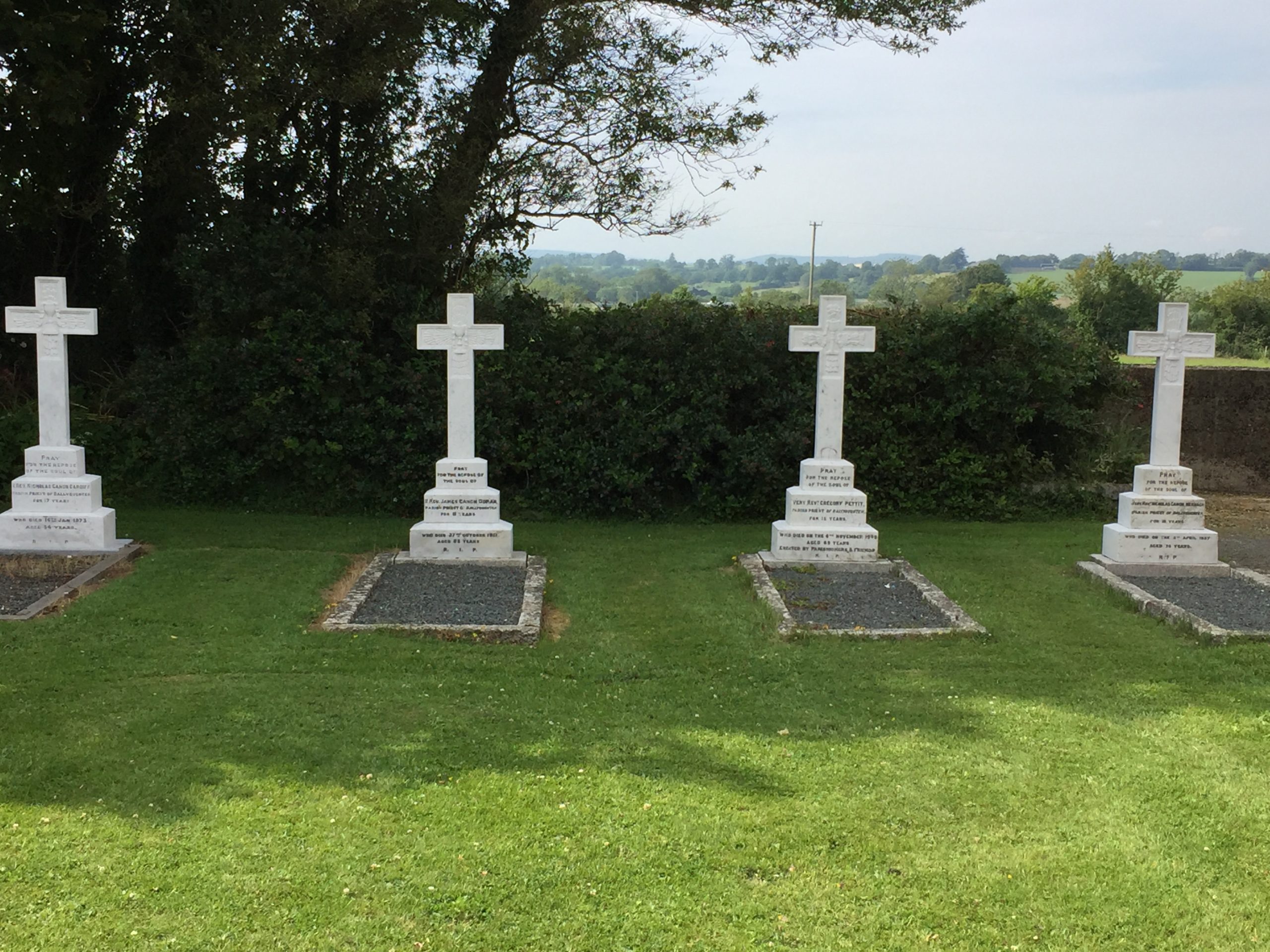

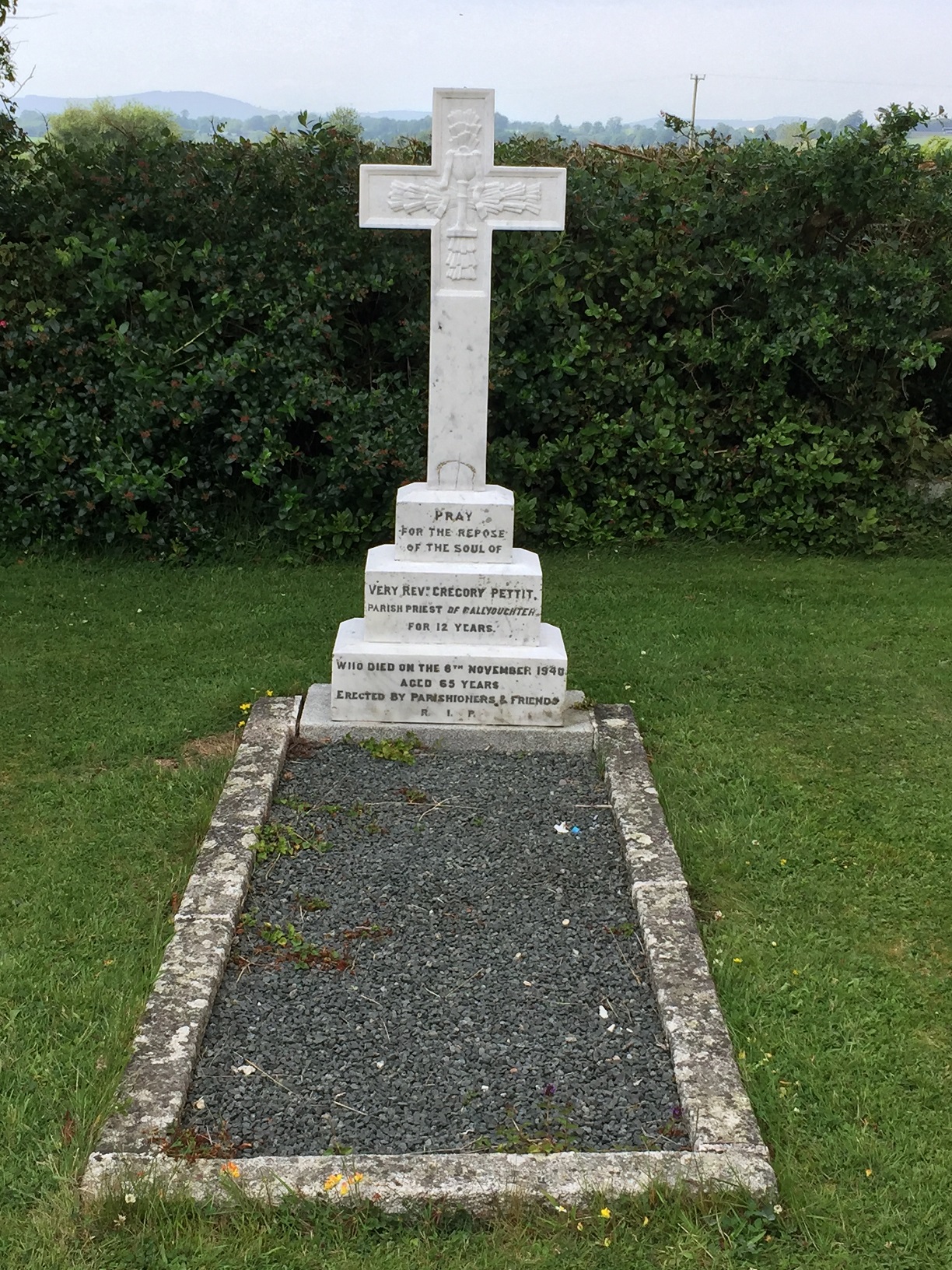
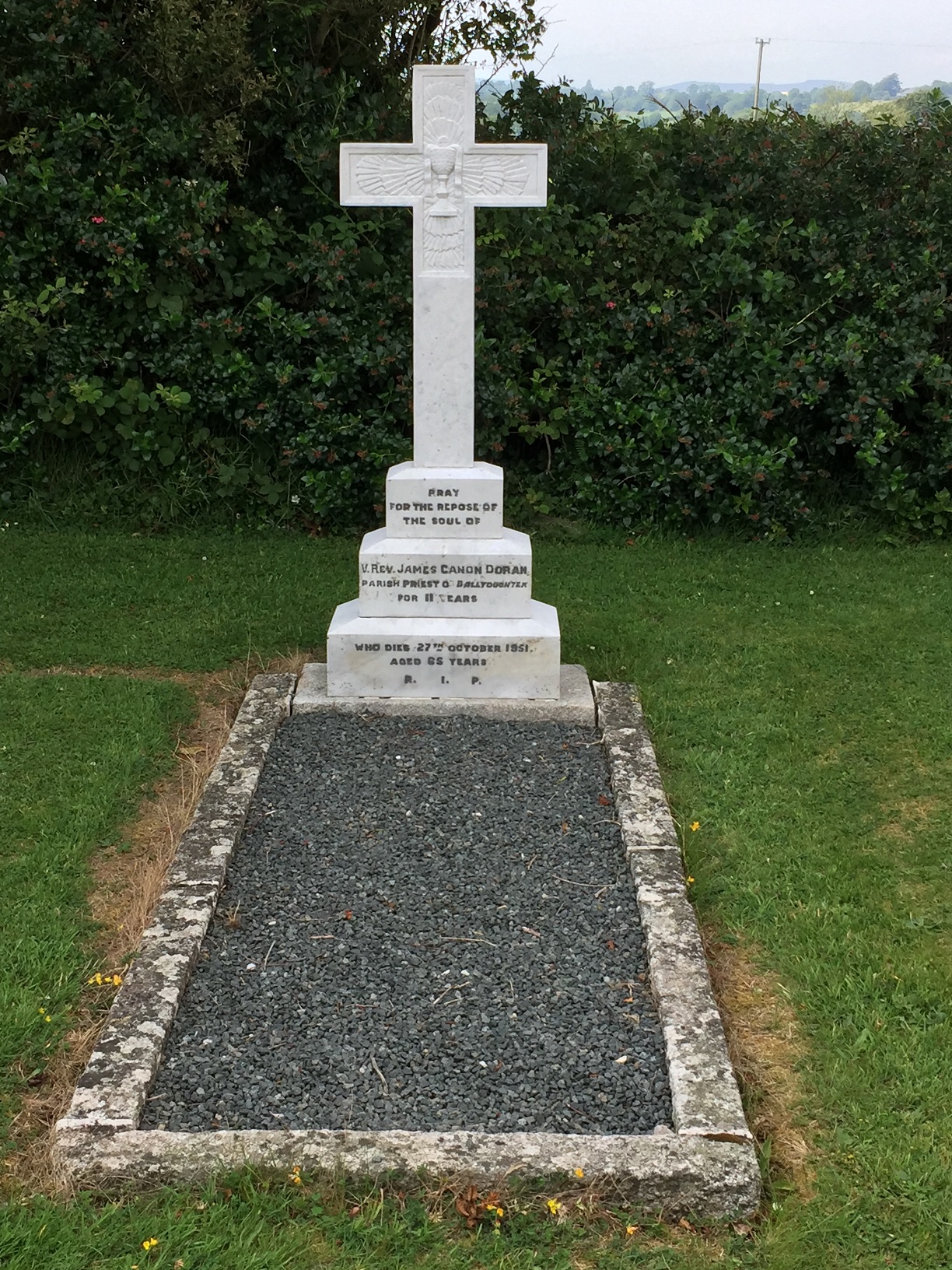
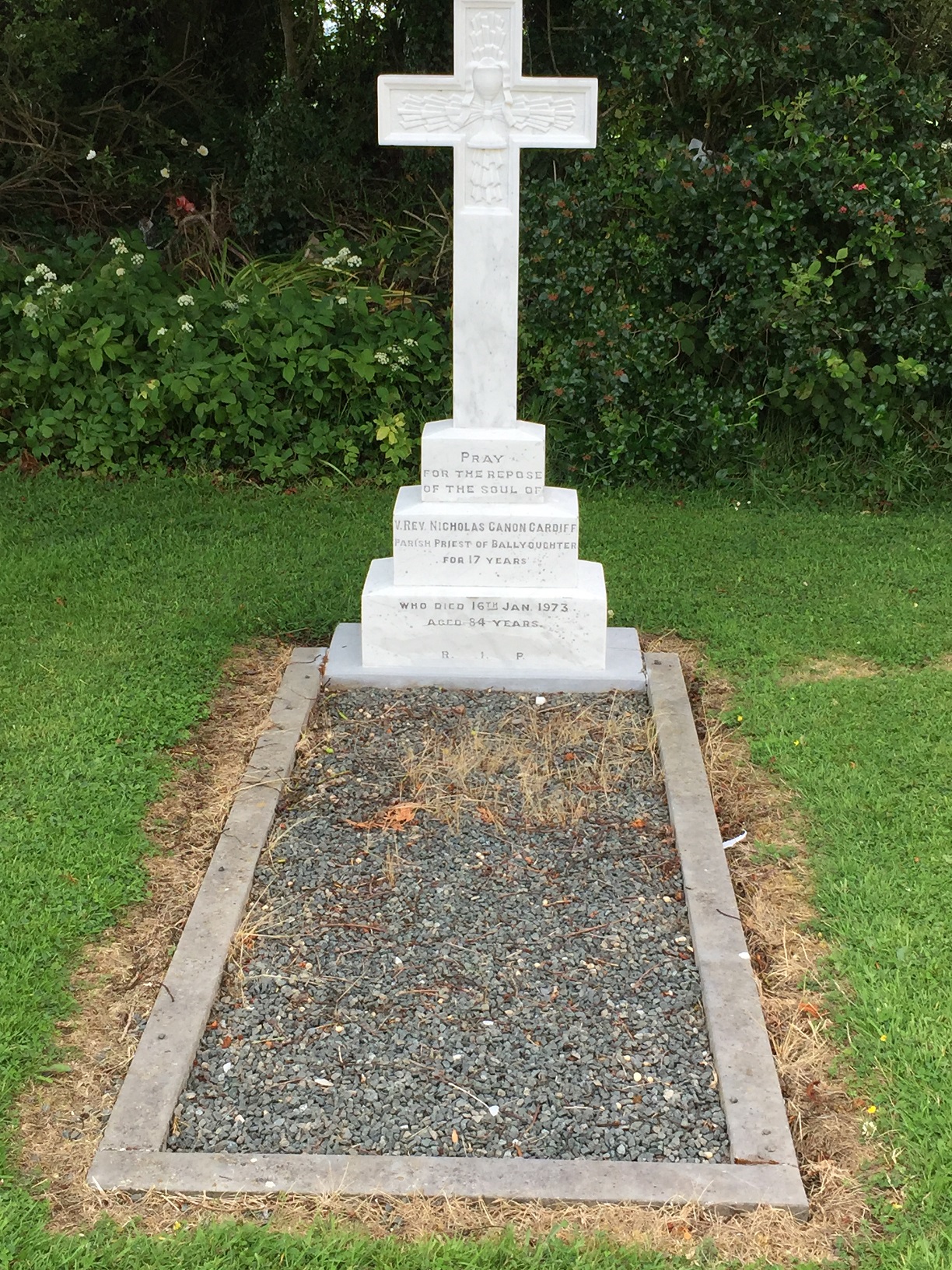

The headstones of four of the parish priests face East, as is the practice in Christian tradition, in anticipation of the second coming of Christ.
All other headstones in the cemetery, including the headstone of Rev. Patrick Doyle, face towards the Church so that the feet of the deceased face the altar. This might be explained by reference to the Roman Ritual of 1950 that stated that, at the funeral Mass, the coffin was to be placed so that the feet of the deceased should point toward the main altar.
Memorial Plaques Dedicated to Deceased Parish Priests in Ballyoughter

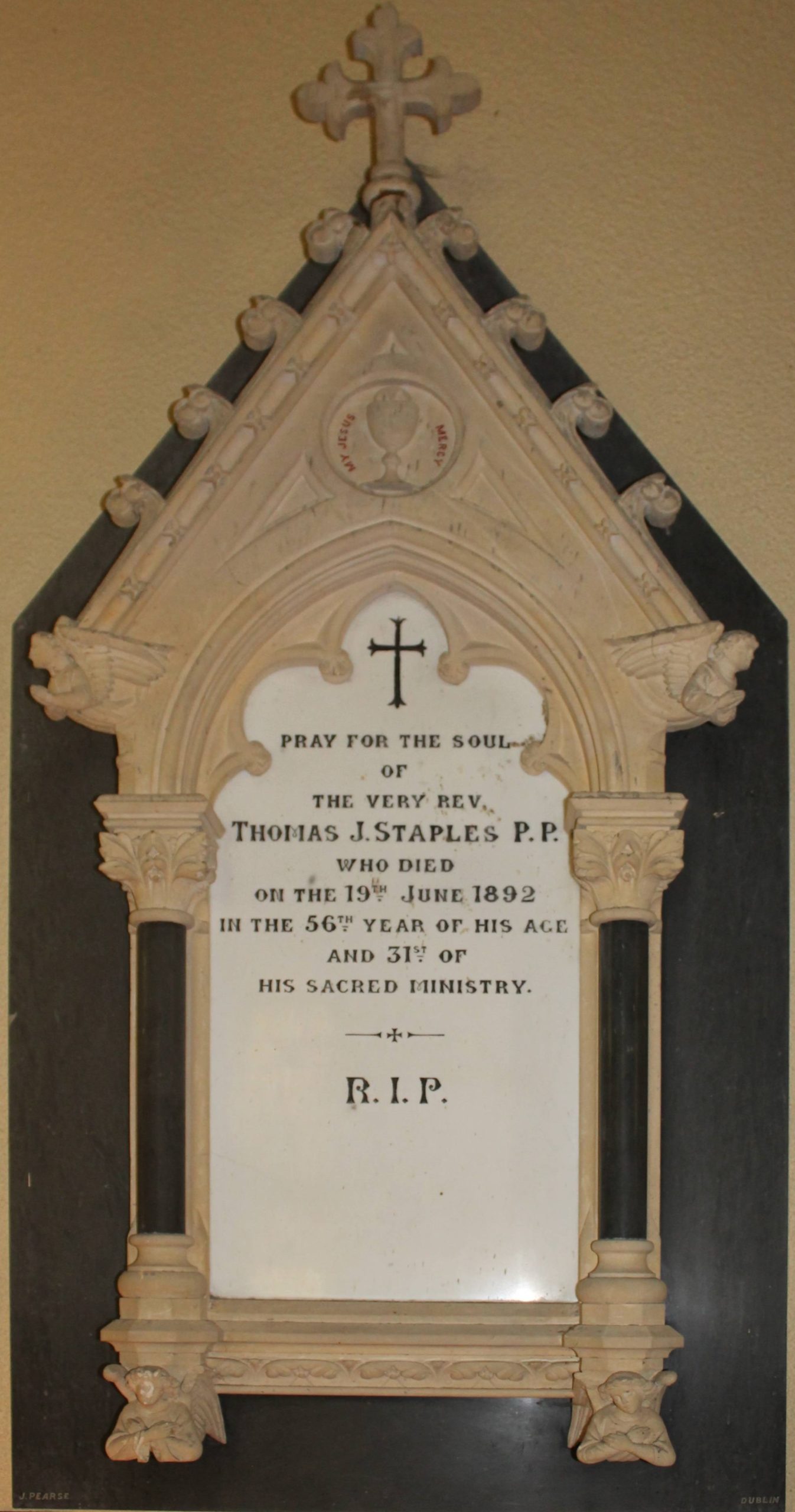

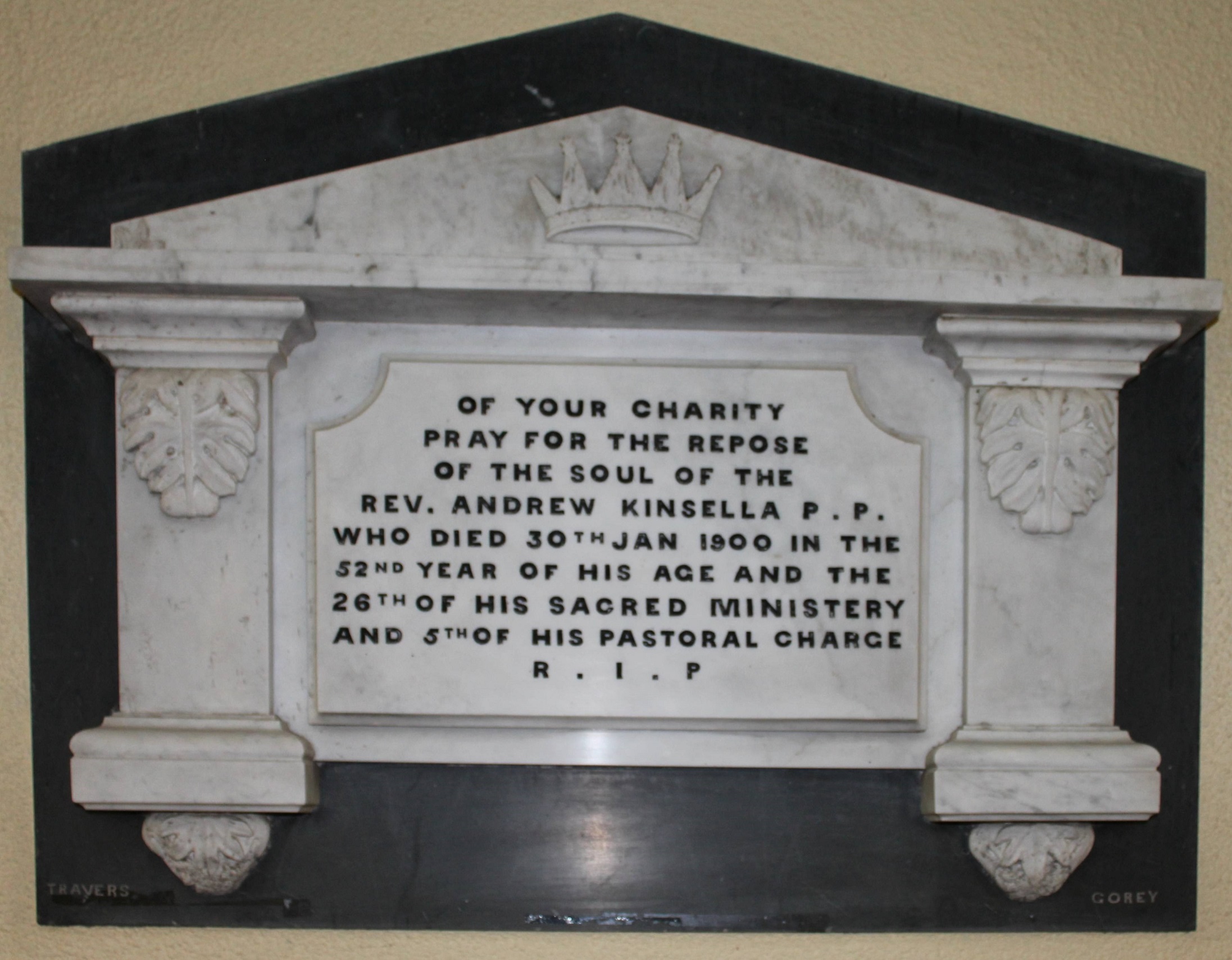

The graves of the Very Reverend Canon Sinnott PP and the Very Reverend Thomas J. Staples are located beneath the floor of the church underneath the respective plaques. These stone-covered graves can no longer be seen as the floor is carpeted.