Tobar an Iarainn · Toberanierin Lower, Co. Wexford
To the north-east of Ballyoughter lies the townland of Toberanierin, also commonly known as Tubberneering. The name Toberanierin derives from the Irish Tobar an Iarainn, meaning “the Iron Well”. The Irish form recorded in the Placenames Database of Ireland is Tobar an Iarainn Íochtarach.
Source: Placenames Database of Ireland (logainm.ie), “Toberanierin Lower / Tobar an Iarainn Íochtarach”, entry 52786.
An historic iron-rich, or chalybeate, well survives at Toberanierin Lower. The word chalybeate is an old term meaning ferruginous, or rich in iron. It was once widely used to describe naturally occurring iron-rich mineral waters but has largely disappeared from everyday use.
The Iron Well is therefore more than simply a surviving feature of the local landscape. It gave its name to the surrounding townland and has connections with mineral-water traditions, local folklore, Jonathan Swift and an account recorded by a local schoolgirl as part of the Schools’ Collection in the late 1930s.
Location of the Iron Well
The Ordnance Survey map below shows the location of the chalybeate well at Toberanierin Lower.
Viewing note: The well is highlighted in yellow in the upper-right area of the map. For best results, view the map full screen and use the zoom controls.
Source: Ordnance Survey Ireland/Government of Ireland. Reproduced under Copyright Permit No. MP 005821.
A Chalybeate Spa
Chalybeate wells and mineral springs became particularly popular during the eighteenth and nineteenth centuries. Their iron-rich waters were consumed both as refreshing drinks and for what were then believed to be medicinal or restorative properties.
Mineral waters were also commercially promoted on the strength of these supposed benefits. One surviving advertisement reproduced on this page described chalybeate water as cool, clear and refreshing while also claiming that the water possessed healing qualities.
Advertisements such as these illustrate how mineral waters and iron-based remedies were promoted to the public for their supposed restorative and medicinal qualities.
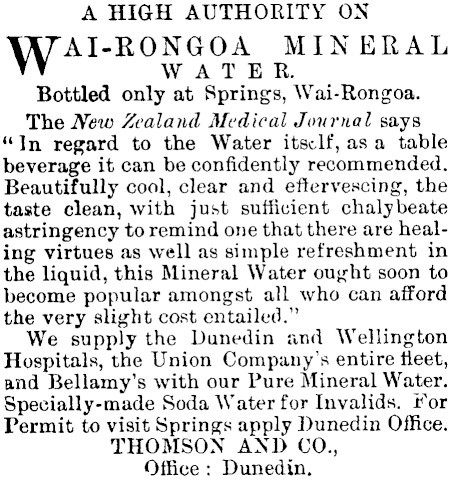
Source: New Zealand Tablet, 30 October 1896, via Papers Past, National Library of New Zealand.
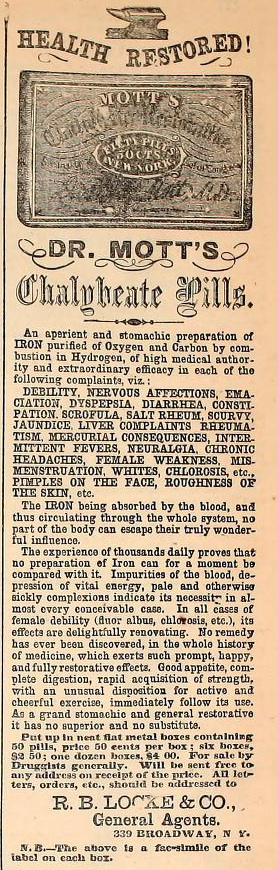
Source: Frank Leslie’s Illustrated Newspaper, 7 January 1860. Author unknown. Rights: Public domain. Image via Wikimedia Commons.
The Iron Well in The Schools' Collection
An important first-hand local description of the Iron Well survives in the Schools’ Collection, a major folklore-gathering project carried out by Irish schoolchildren in the late 1930s. The collection is preserved by the National Folklore Collection at University College Dublin and available through Dúchas.ie.
The account was collected by Olive Steacy, aged 14, of Toberanierin Lower. At the time of her account, the well was still in use and lay about two fields from the dwelling house.
Olive described a fairly large well with an arched top constructed from red brick. A small stream flowed from it through the field and the water emerging from the well had a distinctive reddish colour. She also noted that the surrounding soil was unusually red compared with the neighbouring fields.
The water had a noticeable taste of iron and, according to the account, was seldom used except when the ordinary well had dried up. Even then, the Iron Well was no longer being well maintained. Briars had grown around it, making the interior difficult to see.
The account also preserves an example of local folk medicine: some people believed that water from the well could cure sore eyes. This should be understood as a record of a traditional local belief rather than as a modern medical claim.
The account begins on page 153 and continues on page 154 of The Schools’ Collection, Volume 0889.
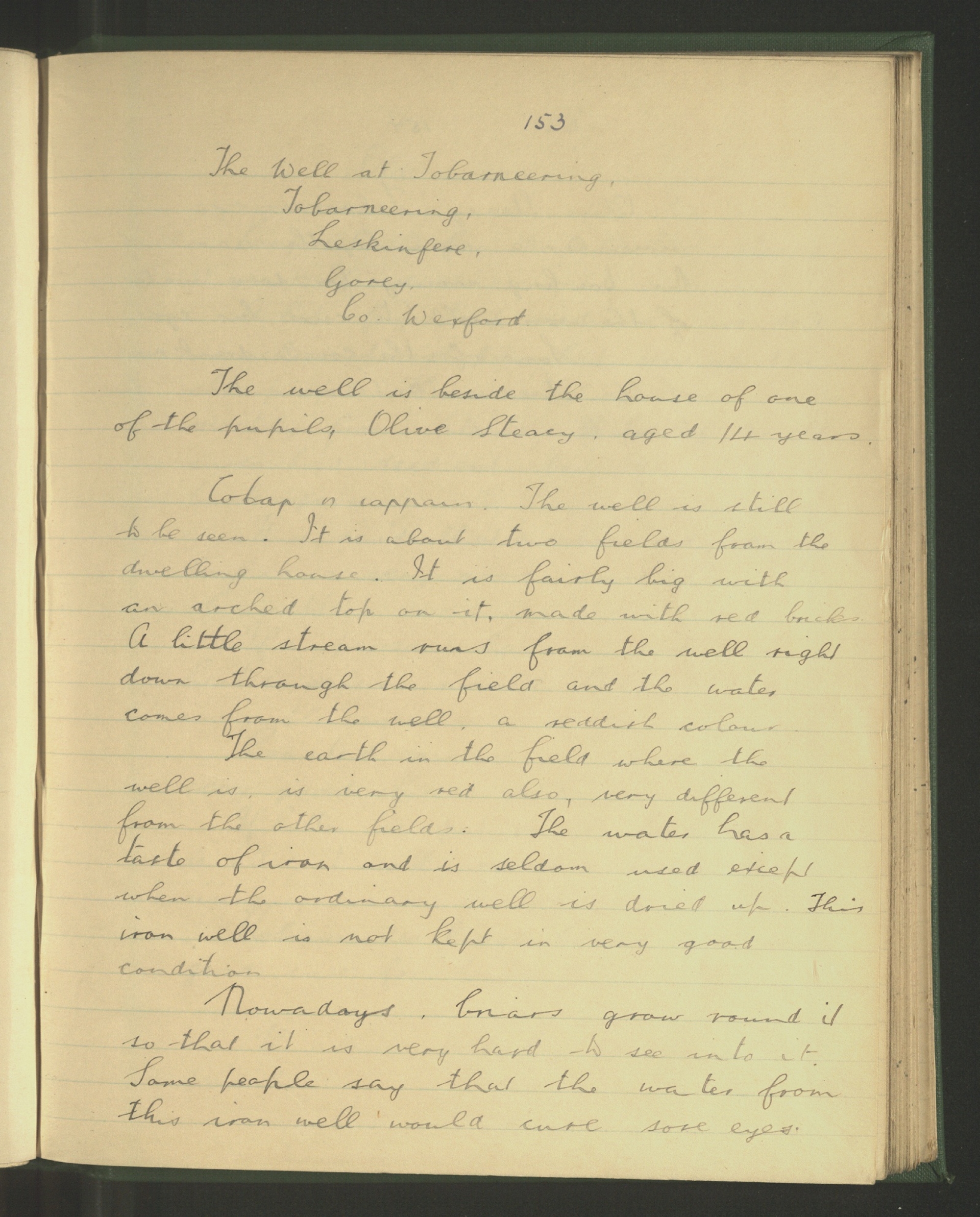
Source: “The Schools’ Collection, Volume 0889, Page 153” by Dúchas © National Folklore Collection, UCD is licensed under CC BY-NC 4.0.
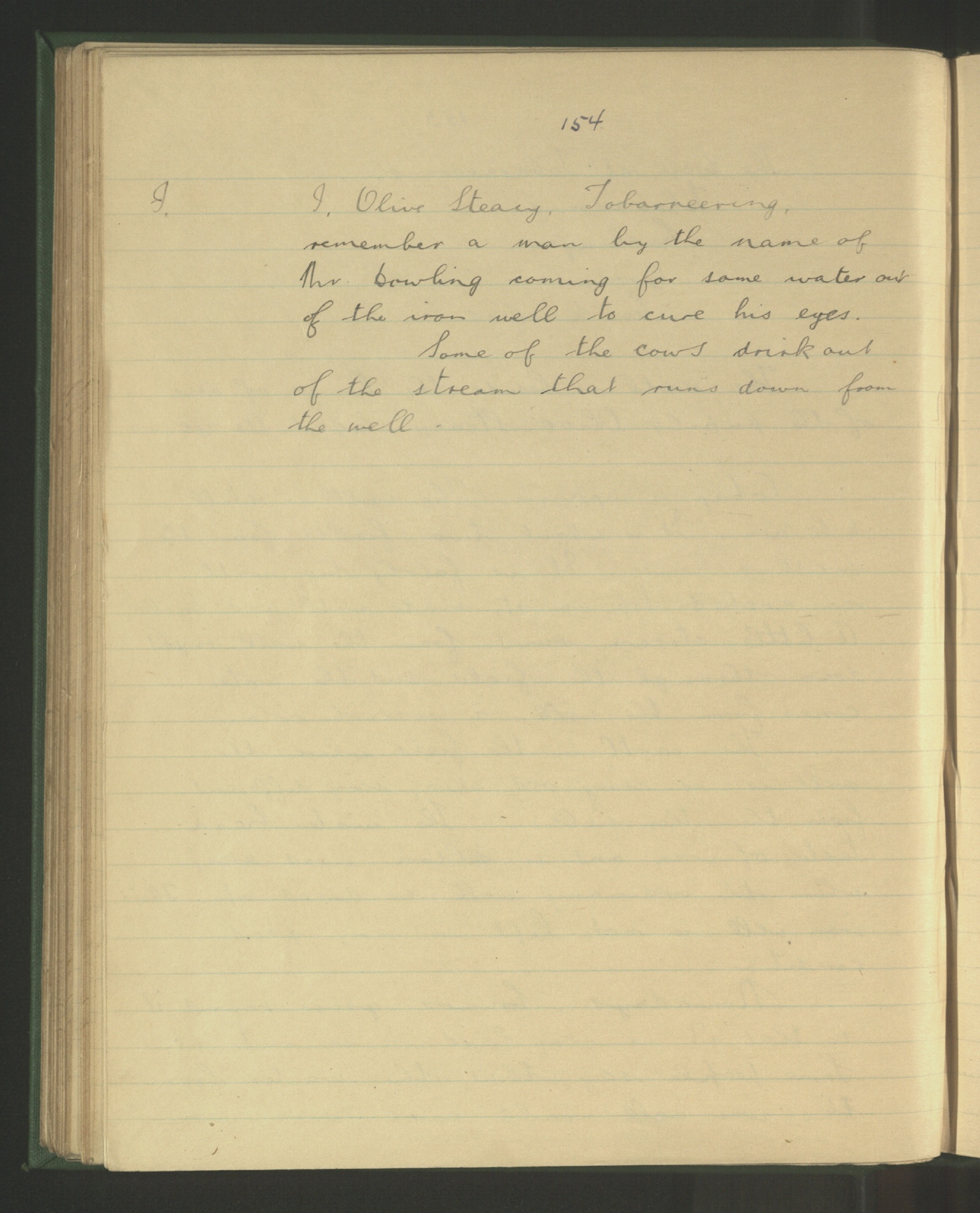
Source: “The Schools’ Collection, Volume 0889, Page 154” by Dúchas © National Folklore Collection, UCD is licensed under CC BY-NC 4.0.
The Iron Well Today
The Iron Well still survives at Toberanierin Lower, although access to it is now difficult. The photographs below record the surviving opening, the narrow entrance to the interior, the point at which the well rises and overflows during wet conditions, and the reddish-brown deposits associated with the iron-rich water.
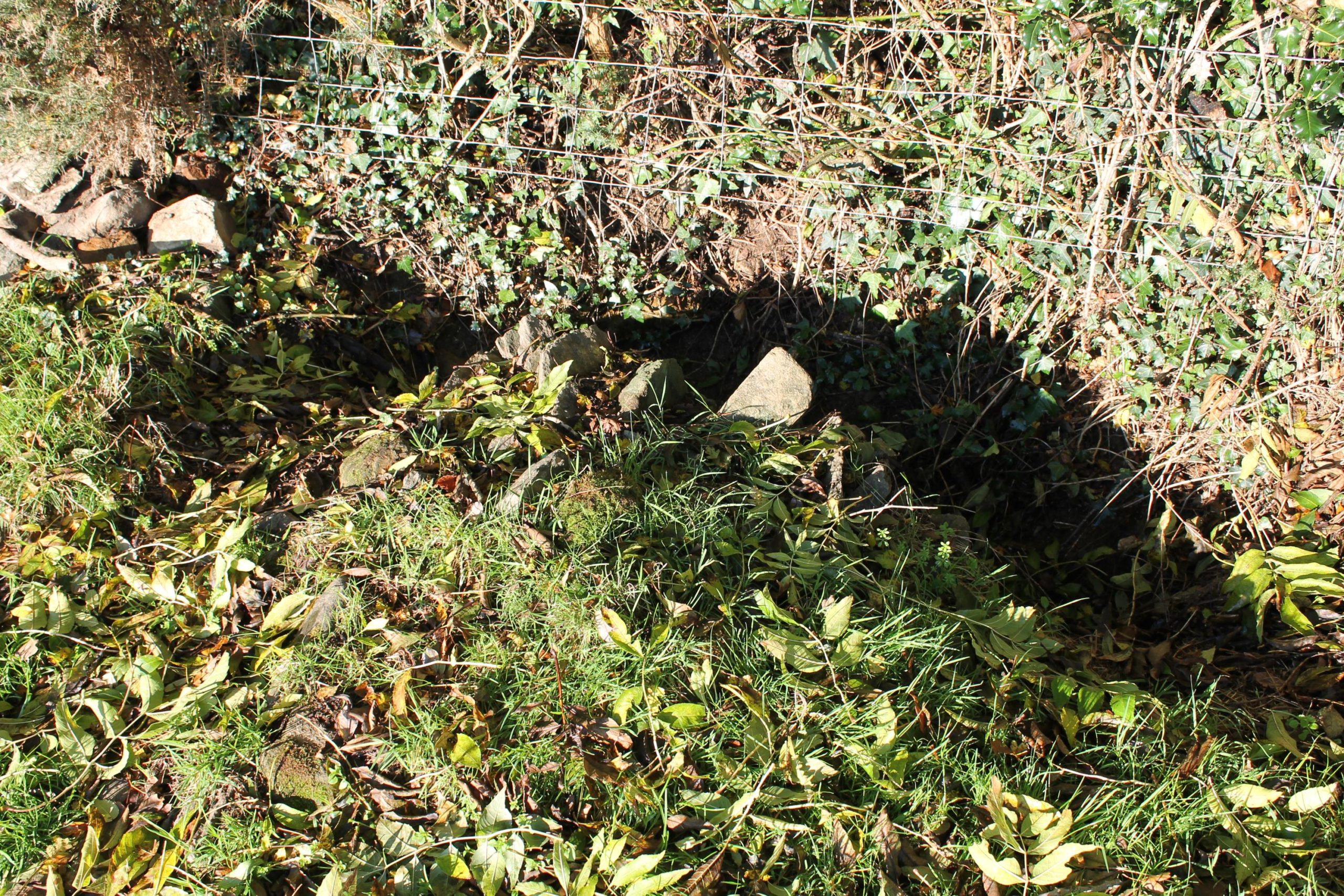

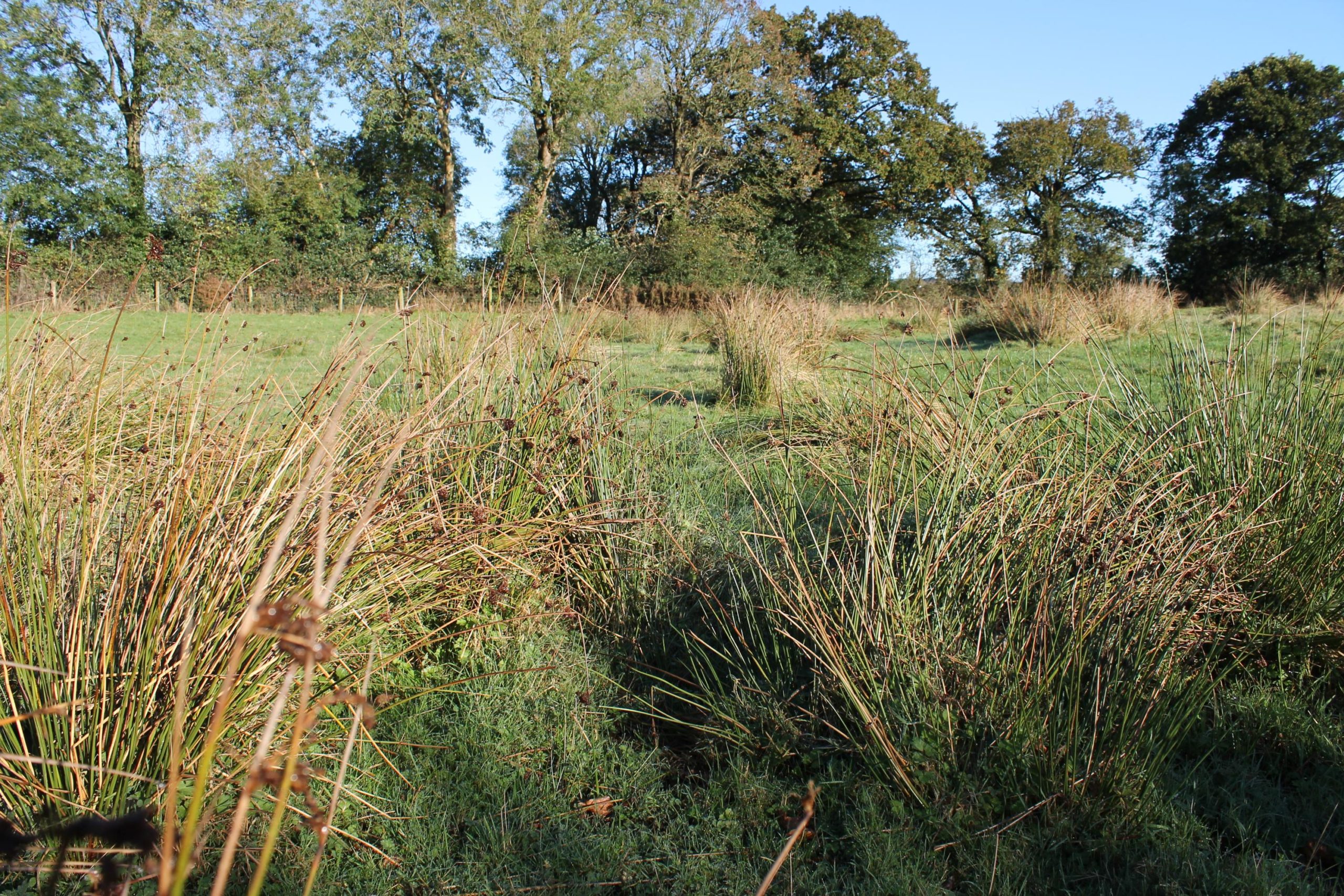

Photographs: Shane Eivers. Taken with the permission of Thomas Hill, Toberanierin Lower.
For Comparison: A Surviving Traditional Well

Image credit: Rosser1954, 2018, via Wikimedia Commons. Licence: CC BY-SA 4.0.
Note: Image cropped for display.
The Science Behind Iron Wells
Why is there iron in the water?
Iron occurs naturally in many rocks and soils. As groundwater moves through the ground, some of this iron can dissolve into the water. The amount that dissolves depends on the local geology and on the chemical conditions underground, particularly the oxygen content and acidity of the groundwater.
In deep or poorly oxygenated groundwater, iron can remain dissolved mainly as iron(II) ions. Water containing dissolved iron may therefore appear clear and colourless even when the iron concentration is relatively high.
Why does the water turn reddish-brown?
When iron-rich groundwater reaches the surface and comes into contact with oxygen in the air, the dissolved iron begins to oxidise.
Iron(II) is converted into forms of iron(III), which are much less soluble in water. These iron compounds precipitate out of the water and form visible deposits.
The deposits may initially appear yellow or orange before developing the familiar reddish-brown colour associated with iron-rich water.
This process helps to explain both the reddish colour historically recorded at the Iron Well and the deposits that can still be seen around the well today.
Practical effects of iron-rich water
Iron-rich water can cause a number of practical problems where groundwater is used domestically.
As dissolved iron oxidises and precipitates, deposits can build up in pipes and other water systems, sometimes reducing the flow of water or contributing to blockages.
Iron can also cause characteristic reddish-brown staining on:
Laundry
Sinks and sanitary ware
Crockery and kitchen utensils
Other surfaces regularly exposed to the water
These stains can be difficult to remove.
Iron can also affect the taste and appearance of water. It may react with naturally occurring compounds such as tannins in drinks including tea and coffee, producing dark or black discoloration.
Iron bacteria
Naturally occurring microorganisms commonly known as iron bacteria can also be found in soils, aquifers and groundwater systems containing iron.
These bacteria are not generally regarded as disease-causing organisms. They obtain energy through chemical reactions involving dissolved iron and can contribute to the formation of iron deposits and reddish-brown or orange slime.
This material may accumulate around:
Wells and well openings
Water pipes
Sinks
Toilet cisterns
Other plumbing and water-storage systems
The reddish-brown deposits and slime visible inside the Iron Well are therefore likely to result from a combination of precipitated iron compounds and biological growth associated with iron-rich groundwater.
Iron and health
Iron is an essential element in human nutrition and is required for many important functions in the body. However, excessive iron intake can be harmful. Very large doses of iron, particularly through accidental or excessive consumption of iron supplements, can cause gastrointestinal symptoms including abdominal pain, nausea, vomiting and diarrhoea. Constipation can also occur with oral iron supplementation.
These effects should not be interpreted as typical consequences of drinking naturally iron-rich groundwater. In drinking water, elevated iron is more commonly associated with changes in taste and appearance, reddish-brown staining and deposits in pipes and fittings.
People with conditions that cause excessive accumulation of iron in the body, such as hereditary haemochromatosis, may need to take particular account of their overall iron intake and should follow appropriate medical advice.
The historical reputation of chalybeate wells for medicinal or healing properties should not be taken as evidence that untreated water from an historic well is safe to drink today. Laboratory testing is required to establish whether water is suitable for drinking.
What this means at the Iron Well
The reddish colour described historically at the Iron Well is therefore readily explained by its chemistry. Iron dissolves into groundwater below the surface, remains dissolved under low-oxygen conditions, and then oxidises when the water emerges and comes into contact with air.
The resulting iron compounds, together with the activity of naturally occurring iron bacteria, produce the distinctive orange and reddish-brown deposits that remain visible at the well today.
Sources: Environmental Protection Agency, CI002076 Response (2023); World Health Organization, Chemical Fact Sheets: Iron (2022); National Institutes of Health, Office of Dietary Supplements, Iron: Fact Sheet for Health Professionals (2025); Minnesota Department of Health, Iron Bacteria in Well Water (2026); Environmental Protection Agency, FAQs on Drinking Water.
Jonathan Swift
One of the best-known stories associated with the well concerns Dean Jonathan Swift (1667–1745), author of Gulliver’s Travels. Local tradition, supported by later written accounts, associates Swift with a visit to the spa at Tubberneering in 1728.
Swift was suffering from recurring problems involving vertigo, dizziness and ringing in the ears, and the visit has traditionally been associated with his search for relief from these symptoms. The full story of Swift’s visit, his friendship with the Ram family of Gorey and the colourful folklore surrounding the occasion is explored on a separate page.